Slavomir Rawicz The Long Walk Pdf
L.jpg' alt='Slavomir Rawicz The Long Walk Pdf' title='Slavomir Rawicz The Long Walk Pdf' />Further reading. Strandberg, Mikael, et. The Long Walk Articles. MikaelStrandberg. This is an excellent collection of articles relating to The Long Walk. Polish migration to the United Kingdom dates back to medieval times when it was linked to trade and diplomacy. Serial Element 3D Metropolitan. The first noted Pole in England was the 16thcentury. Language Strategies For The Domain Of Colour Computational Models Of Language Evolution Volume 3 Document about Language Strategies For The Domain Of Colour Computational. Slavomir Rawicz The Long Walk Pdf' title='Slavomir Rawicz The Long Walk Pdf' />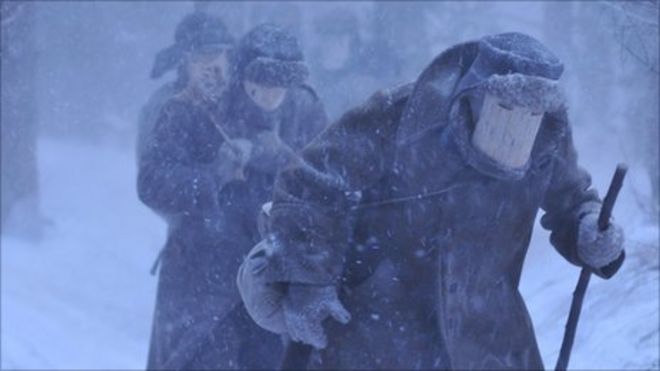 In 1964 I was at school in Ilkeston, Derbyshire Hallcroft, and was president of our sixth form society. Slavomir Rawicz lived in Sandiacre, which is near to Ilkeston. Sawomir Rawicz, n le 1 er septembre 1915 Pinsk alors en Russie, avant dtre en territoire polonais entre les deux guerres mondiales et dsormais en. Poles in the United Kingdom. Polish migration to the United Kingdom dates back to medieval times when it was linked to trade and diplomacy. The first noted Pole in England was the 1. Protestant convert, John Laski, who influenced the English Reformation. With the dismemberment of the PolishLithuanian Commonwealth as a European power in three successive partitions by its neighbours at the close of the 1. In the last quarter of the 1. Russian Pogroms and famine in Galicia Austria Hungary, forced many Polish Jews to flee their partitioned homeland. Most headed for the United States, but a proportion settled in British cities, especially London, Manchester, Leeds and Hull. In the 2. Polish state after the PolishSoviet War 1. This short lived flowering was arrested by the pincer movement of the German invasion from the West in September 1. Soviet invasion from the East that amounted in effect to a fourth partition of the country. Poland, as part of the Western democratic alliance, along with other Central European states, chose to exile its government to London for the duration of World War II. What forces it was able to muster outside its erstwhile borders were put at the disposition of Allied command, hence Polish airmen played a decisive role in The Battle of Britain as did its naval forces under the command of the British Admiralty. The Polish Parachute Brigade became absorbed in the British Army of the Rhine. The collapse of the German Soviet alliance, allowed General Anders to raise an army out of the hundreds of thousands of bedraggled Polish deportees in Siberia and other parts of Soviet Russia. They eventually took part in campaigns in the Eastern Mediterranean and Italy. They formed the nucleus of the Post World War II Polish migration to Britain. Meanwhile, the Yalta Conference, in which it played no part, sealed Polands fifth partition by swapping a third of its oil rich territory in the East, including two major cities, for two major German cities and rather less former German territory in the West and placing the state under the Soviet sphere of influence. For the mass of Polish veterans stranded in the West of Europe this settlement was too risky for a return to their homeland much of which had overnight become part of Ukraine or Belorussia, that is, the entire Kresy region was annexed by the USSR. A much smaller wave of Polish migration to Britain occurred with the imposition of Martial law in Poland as it struggled with democratic stirrings led by Solidarnosc in the early 1. These were mainly students and intellectuals who had been visiting the UK and who chose not to return home to repression. The 2. 00. 4 enlargement of the European Union and the UK governments decision not to restrict travel from the new Accession states encouraged mostly educated or skilled Poles to travel to the UK for work, in preference to Germany. As of 2. 01. 6, the number of UK residents born in Poland was estimated at 9. British Poles, including the descendants of over 2. UK after World War II. The Polish language is the second most spoken language in England and the third most spoken language in the UK after English and Welsh. About 1 of Britains population speaks Polish. Since the UK referendum on British membership of the European Union in June 2. UK tensions appear to have mounted between elements of British society and members of migrant communities. A sudden rise in hate crimes was reported in the press and at least one Polish worker lost his life. History and settlementeditEarly historyeditPolabian Slavs Wends settled in parts of the Danelaw north eastern England ruled by the Danes, apparently as Danish allies. According to the medieval chroniclers Thietmar of Merseburg and Adam of Bremen, King Canute the Great who ruled both Denmark and England was the son of a Polish princess, a daughter of Mieszko I of Poland and sister of Boleslaw I of Poland. An inscription in Liber vitae of the New Minster and Hyde Abbey Winchester mentions King Canute as having a sister named Santslaue Santslaue soror CNVTI regis nostri, which without doubt is a Slavic name, and J. Steenstrup suggests this was a rendering of witosawa. References in medieval chronicles to the involvement of Polish troops in invasions of England are likely related to Canutes Polish ancestry, constituting the earliest evidence of Poles arriving in the country. In the 1. 6th century, when most grain imports to the British Isles were derived from Poland, Polish travellers came as merchants and diplomats, usually on the Eastland Company trade route from Gdask to London. Poles are mentioned in Shakespeares Hamlet e. Israel Gollancz says is an influence of De optimo senatore The Counsellor by Wawrzyniec Grzymaa Golicki. A Polish cleric and nephew of the primate of Poland, Jan Laski 1. Calvinism while staying in Basel, became an associate of Archbishop Cranmer and as a capable administrator spent a number of years in England working on the establishment of the Church of England. Shortly before his death, he was recalled to the royal court in Poland. As early as 1. 60. Poles in England for the Virginia Company to hire a group of them to sail to America to help salvage the Jamestown Colony, where they formed an early trade union. After the Battle of Vienna in 1. Londons Soho area was called The King of Poland Sobieski, John, and soon afterwards the street on which it stands was named Poland Street which exists to this day. In the 1. 8th century, some Polish Protestants settled around Poland Street as religious refugees from the counter reformation in Poland. In the 1. 9th century, after the collapse of the November Uprising of 1. Russian Empire, many Polish insurgents came to the UK in search of political sanctuary. It led to the formation in 1. Literary Association of the Friends of Poland by poet, Joseph Campbell and others with the aim of keeping British public opinion informed about the plight of Poland. The Association had several regional centres. At one of its meetings it was addressed by the Polish diplomat and statesman, Count Adam Jerzy Czartoryski. The social connections thus afforded between the two countries encouraged the influential noble ubieski family to educate its sons at the Catholic Ushaw College in Durham and marry into the old recusant Bodenham de la Barre family. Subsequently, the Redemptorist Fr. Spread 6 Keygen more. Responsive Web Design With Html5 And Css3 Pdf'>Responsive Web Design With Html5 And Css3 Pdf. Bernard Lubienski 1. Catholic missionary in England. The next Polish insurgency, the January Uprising of 1. Polish exiles into Britain. After the First World War Poles settled in large numbers in London many from the London Polish Prisoner of War camps in Alexandra Palace and Feltham. Second World War periodeditThe Poles made a crucial contribution to the Allied war effort, which directly led to the formation of the Polish British community as it exists today. The majority of Poles came to the United Kingdom as military or political migrs after the German and Soviet occupation of Poland. In 1. 94. 0, with the fall of France, the exiled Polish President, Prime Minister and government transferred to London, along with a first wave of at least 2. Poles formed the fourth largest Allied armed force after the Soviets, the Americans and the combined troops of the British Empire. Poles were the largest group of non British personnel in the RAF during the Battle of Britain, and the 3.